


News
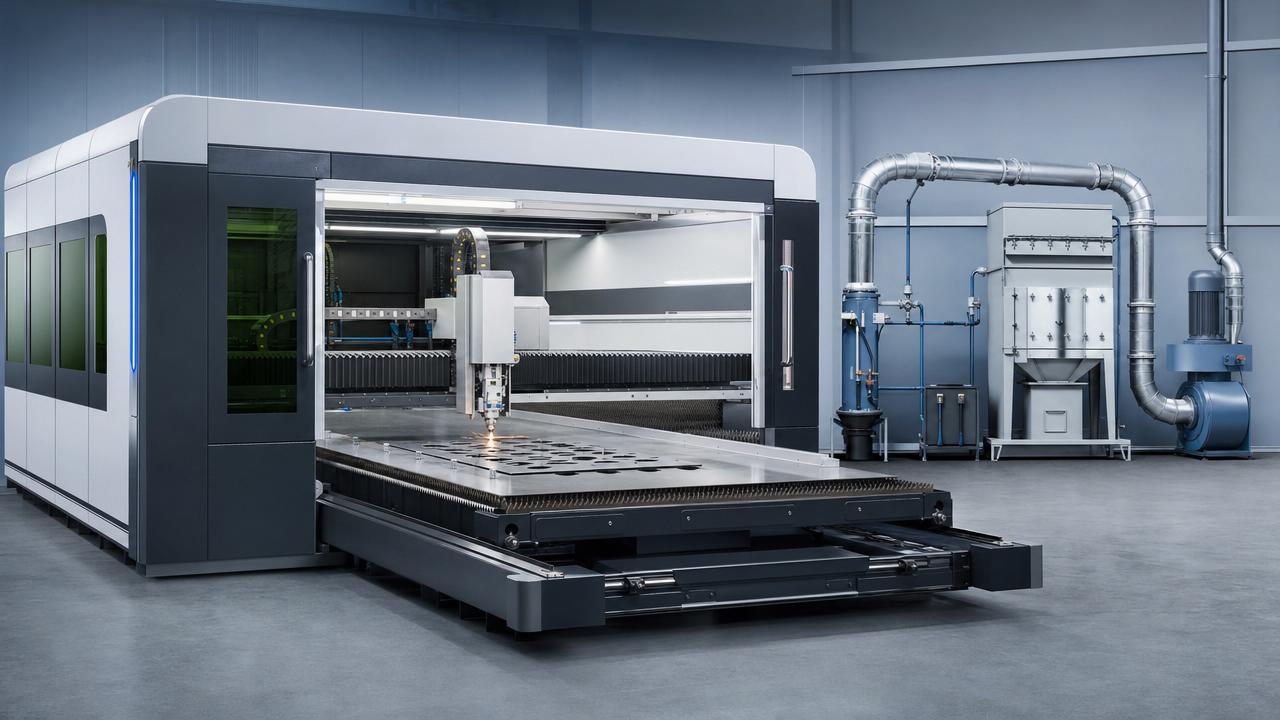
In 2026, the true cost of Laser Cutting Machines goes far beyond the initial purchase price. For financial decision-makers, understanding equipment pricing, operating expenses, maintenance, energy use, and long-term return is essential before approving any investment. This guide breaks down the key cost factors shaping Laser Cutting Machines in 2026, helping you compare options more clearly and make budget decisions with greater confidence.
For finance teams, the challenge is rarely just whether a machine can cut metal. The real question is whether the total investment remains justified over 3 to 7 years, under actual production conditions, staffing limits, maintenance schedules, and energy costs.
That is why evaluating Laser Cutting Machines in 2026 requires a broader lens. Capital expenditure, installation, consumables, downtime risk, training, software, and resale value all influence the final cost per part and the payback period.
What Shapes the Purchase Price of Laser Cutting Machines in 2026
The base price of Laser Cutting Machines in 2026 is primarily driven by power level, bed size, automation level, cutting head quality, control system, and safety enclosure design. A 3kW entry configuration and a 20kW high-output system serve very different business models and cost structures.
In practical budgeting, buyers should separate machine price from project price. The machine itself may represent only 65% to 80% of total upfront investment once assist gas systems, dust extraction, voltage adaptation, loading devices, and commissioning are included.
Core equipment variables
- Laser source power: common ranges include 1.5kW, 3kW, 6kW, 12kW, and 20kW+
- Working area: typical beds include 3015, 4020, and 6025 formats
- Automation: manual loading, semi-automatic exchange tables, or full tower systems
- Material focus: thin sheet, mixed-gauge fabrication, or thick plate production
- Software package: nesting, remote diagnostics, and ERP integration may be optional
Why power rating affects more than output
Higher wattage does not only raise the sticker price. It can also increase the cost of chiller capacity, electrical infrastructure, optics protection, and gas consumption. For some plants, moving from 6kW to 12kW changes not just performance, but the entire installation budget.
The table below shows how different configuration levels typically affect investment planning. These are common market ranges rather than fixed quotations, but they help finance reviewers compare budget categories more realistically.
The key takeaway is that price differences between Laser Cutting Machines are not simply a matter of brand positioning. In most cases, they reflect measurable changes in throughput, shift utilization, material range, and supporting infrastructure requirements.
Operating Costs: The Budget Items That Continue After Installation
For financial approvers, ongoing operating costs often determine whether the original investment case remains attractive after year 1. Laser Cutting Machines can perform efficiently, but efficiency depends on how power, gas, labor, and maintenance behave under real factory schedules.
A machine running 1 shift per day for 22 days per month has a very different cost profile from one operating 2 or 3 shifts. Utilization rate is one of the fastest ways to improve or weaken return on investment.
Energy consumption and utility planning
Energy use varies with source power, duty cycle, material thickness, and auxiliary systems. A plant should budget not only for the laser source, but also for the chiller, extraction system, servo motors, and compressed air or gas supply. Peak power load matters for electrical planning and tariff exposure.
Assist gas and consumables
Nitrogen, oxygen, and compressed air can materially affect cost per part. In high-volume stainless steel cutting, nitrogen demand can become one of the largest recurring expenses. Nozzles, protective lenses, ceramic rings, and filters also require replacement at intervals tied to workload and process discipline.
Common monthly cost categories
The table below provides a structured view of recurring cost lines that finance teams should include in annual ownership models. Exact figures differ by region and application, but the categories themselves are consistently relevant.
Finance teams should be cautious about proposals that emphasize high cutting speed while ignoring gas usage, maintenance intervals, or labor handling time. In many facilities, those hidden costs reduce the expected savings by 10% to 25% if not modeled early.
Maintenance, Downtime, and Service Response Risk
Maintenance cost is not only about spare parts. It includes preventive service, troubleshooting delay, operator mistakes, software issues, and the revenue impact of downtime. A lower-priced machine may appear attractive until an unplanned stop disrupts delivery commitments for 3 to 5 days.
For Laser Cutting Machines, financial risk increases when service coverage is unclear. If local parts support is limited, even a small component failure can extend downtime significantly. That risk should be translated into lost throughput, delayed orders, and overtime recovery cost.
Key maintenance checkpoints
- Daily inspection of optics cleanliness, nozzle condition, and gas lines
- Weekly checks on dust extraction, lubrication points, and motion accuracy
- Monthly review of chiller performance, filter status, and electrical stability
- Quarterly preventive maintenance with alignment and calibration review
Questions procurement should ask suppliers
- What is the standard response window: 4 hours, 24 hours, or 72 hours?
- Which parts are stocked locally, and which require international shipment?
- How many operator training days are included in the proposal?
- Is remote diagnostics included, optional, or charged separately?
- What preventive maintenance tasks can be handled internally?
A practical rule for financial review is to assign a downtime cost per hour based on your plant output. Once that number is visible, service quality becomes easier to compare across competing Laser Cutting Machines, even when equipment prices look similar.
How to Evaluate ROI and Payback Period Realistically
Return on investment should be based on production economics, not sales claims. In 2026, the most reliable ROI models for Laser Cutting Machines usually examine a 36 to 60 month period and compare internal production savings with current outsourcing cost, scrap rate, lead time, and labor utilization.
If a company is replacing older CO2 systems, the gains may include lower maintenance frequency, better energy efficiency, and faster setup. If it is adding first-time laser capacity, the focus may shift toward outsourcing reduction and schedule control.
Four ROI variables finance teams should model
- Cost per part before and after investment
- Monthly machine utilization target, such as 55%, 70%, or 85%
- Expected scrap reduction and rework reduction
- Revenue or margin impact from shorter lead times
The table below helps convert technical performance into financial language that approval teams can use. This is often the missing link in capital equipment reviews, especially when production and finance departments use different evaluation criteria.
A realistic payback target for many sheet metal businesses falls in the 18 to 36 month range, but that depends heavily on utilization and job mix. If actual demand remains inconsistent, even a high-performance machine can underdeliver financially.
Common Costing Mistakes When Approving Laser Cutting Machines
Several procurement errors repeat across the market. The first is approving Laser Cutting Machines based on maximum speed demonstrations rather than average output across mixed materials. The second is using ideal gas and labor assumptions instead of plant-specific data.
Another common mistake is treating financing structure as separate from equipment selection. Lease terms, deposit ratio, warranty scope, and service contract length all influence total cash exposure during the first 12 to 24 months.
Five areas to verify before final approval
- Full installed cost, including extraction, gas, training, and electrical work
- Annual operating cost under your actual shift pattern
- Service response terms and spare parts availability
- Utilization assumptions used in ROI calculations
- Upgrade path if production volume increases within 2 to 3 years
Why this matters to finance reviewers
Technical teams may focus on cut quality and speed, while finance reviewers focus on cash flow, risk, and payback. A strong approval process connects both perspectives, using common definitions for total cost of ownership, downtime cost, and required output levels.
In 2026, the smartest Laser Cutting Machines investments are rarely the cheapest on paper. They are the ones that align machine capability with production demand, support structure, operator readiness, and a clearly modeled return over time.
If you are reviewing capital budgets for Laser Cutting Machines, a structured comparison can prevent underestimating operating cost and overestimating payback speed. A detailed evaluation of power range, automation level, maintenance burden, and service support will improve approval accuracy.
To explore machine options more clearly, get a tailored cost analysis, consult product details, or request a customized solution based on your production volume, material mix, and financial targets.
RECENT NEWS
Online Message